Renovating a wooden slat ceiling: paint it or cover it?
Wooden planchette ceilings make a room feel dark and dated. You have two realistic options: sand and paint the slats, or mount a new ceiling below them. Here is an honest comparison — including when a stretch ceiling is the smarter route.
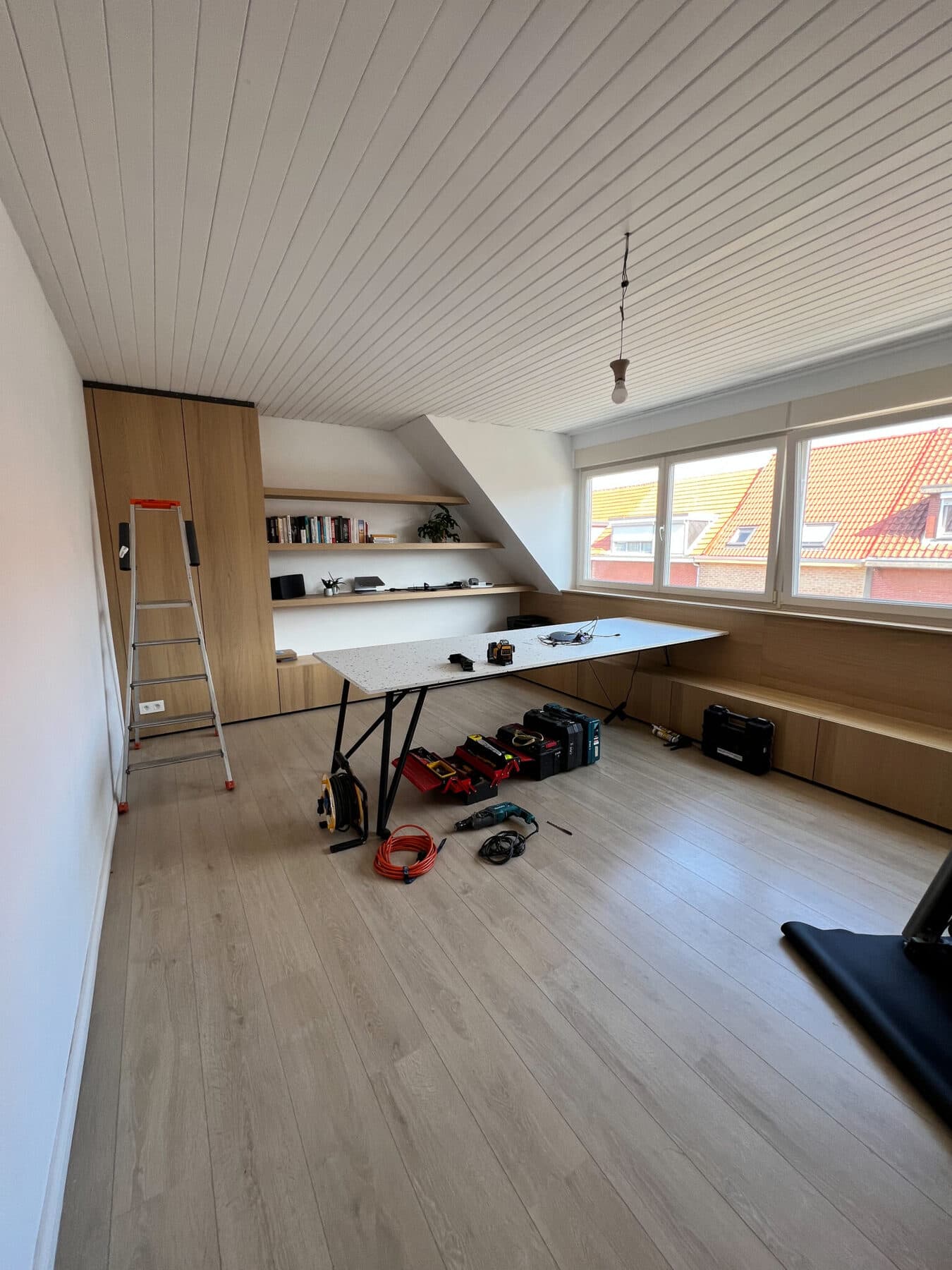
Why slat ceilings feel dated
Wooden planchettes were everywhere in Belgian homes from the seventies through the nineties. The wood itself is usually still fine — the problem is optical. Dark lacquered slats absorb light, press the room down visually and clash with the bright, calm interiors most renovations aim for.
The good news: you almost never have to tear the ceiling down. Both realistic fixes work on top of, or just below, the existing slats.
Option 1 — sand and paint the slats
Painting is the budget route, and done properly it can look good. Degrease the slats first with a non-foaming cleaner, so the sanding paper does not clog. If the old varnish is flaking, sand it back with P60 and work up to P100 for a surface the primer can grip.
Prime with a felt roller, respect the drying times — count 24 to 48 hours depending on the condition of the wood — and finish with two coats of quality ceiling paint. The gaps between the slats stay visible, which some people like; if you want them gone, they need filling and sanding, and at that point the labour starts to outweigh the savings.
Option 2 — a new ceiling below the slats
The alternative is to leave the planchettes where they are and mount a new, perfectly flat ceiling a few centimetres below them. Classically that means a plasterboard ceiling: framing, boards, joints, sanding and painting — solid, but a week of work and a house full of dust.
A stretch ceiling reaches the same flat result a different way. A slim profile is fixed around the perimeter, and a membrane is tensioned into it — over the existing slats, in a single day, without sanding dust and usually without even moving the furniture out. Spots, ventilation and sensors are integrated during the same visit.
Which one should you choose?
Paint if the budget is tight, the slats are in good condition and you do not mind the grooved look staying. Choose a new ceiling below if you want a seamless modern surface, need to hide cables, pipes or bad repairs, or want built-in lighting.
Between plasterboard and stretch: plasterboard wins on DIY familiarity, stretch wins on speed, cleanliness and maintenance — the membrane never cracks, never needs repainting, and a matte white finish is indistinguishable from a freshly plastered ceiling.
What it looks like in practice
A typical living room takes our installers one working day: profile up, membrane tensioned, lighting connected, done. The old planchettes stay hidden above the new ceiling — no demolition container, no debris.
Curious what that would cost for your room? Request a free quote with your dimensions and we will come back with a concrete price, usually the same working day.
Thinking about a stretch ceiling?
Get a free, no-obligation quote for your space.